Family IPTV Viewing Habits Audit: How to Assess Your Household Entertainment Needs Before Subscribing
October 26, 2026 · 14 min read
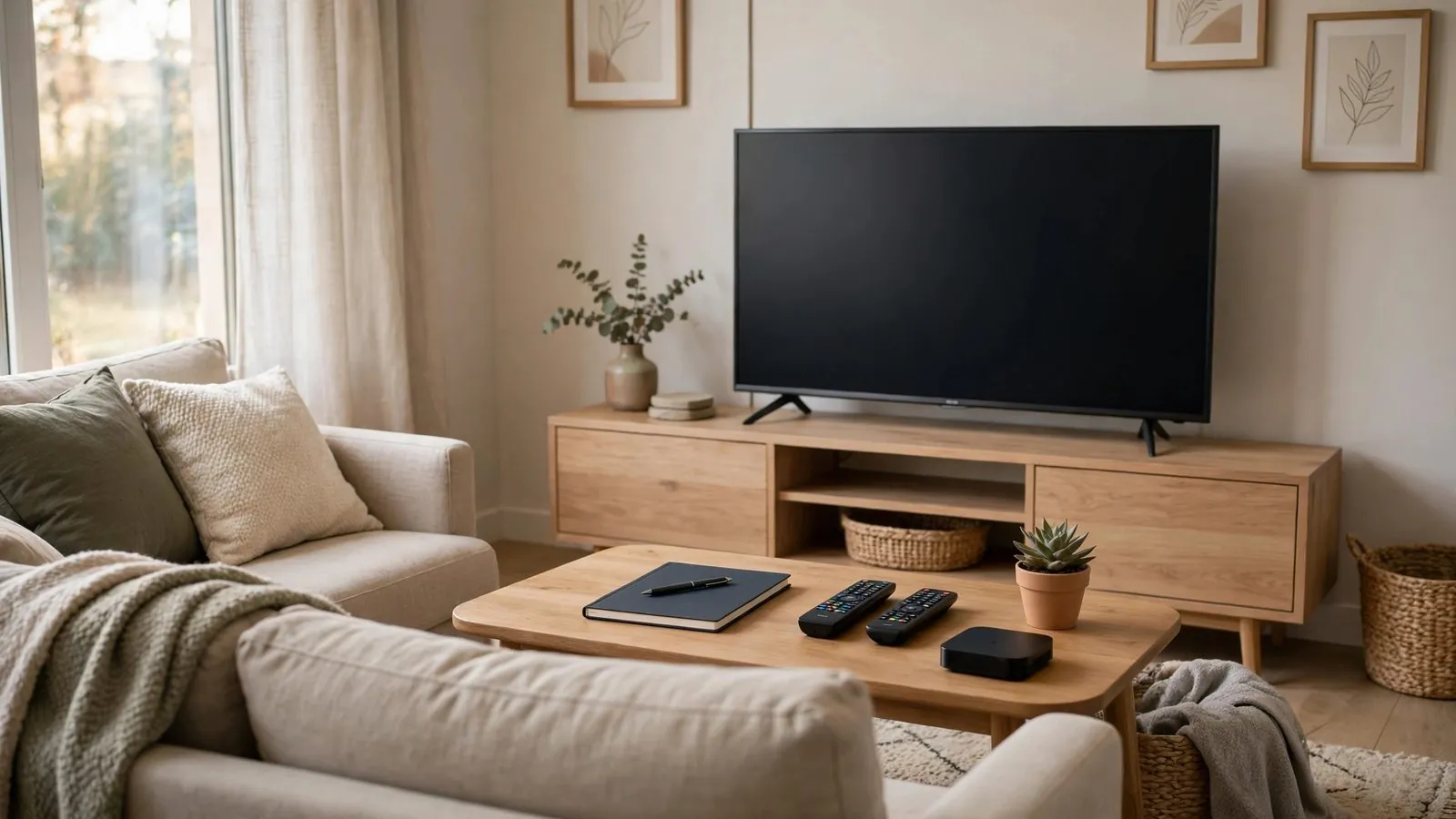
Subscribing to a digital television service often happens on impulse. An upcoming sporting event, a casual neighbor recommendation, or an expiring contract frequently prompts an immediate sign-up without prior planning. In a busy family home, this hurried approach regularly leads to domestic frustration. Household members discover that core programming is missing, family members compete for the same display during dinner, or the household pays for extra connections that sit unused week after week.
Conducting a family entertainment audit before making any financial commitment can help reduce these issues. Rather than forcing domestic routines to conform to an unfamiliar service, an audit clarifies how your household currently consumes media. Taking stock of physical screens, identifying peak viewing hours, mapping content interests across individual members, and establishing clear household guidelines enables families to choose an entertainment arrangement tailored to their living room while minimizing unnecessary expenses.
Why an Entertainment Audit Helps Avoid Household Subscription Mismatches
Subscription disappointments frequently stem from a mismatch between platform features and actual domestic habits. When households purchase a television package on impulse, they often base choices on anticipated viewing rather than daily routines. For example, subscribers might assume everyone will watch communal broadcasts together, while household members actually prefer following distinct series, sports fixtures, or catch-up content on their own schedules.
An entertainment audit serves as an objective assessment of daily living room life. It highlights where family entertainment needs intersect and where they diverge. For example, selecting a plan with limited simultaneous streams when three family members regularly watch different broadcasts at eight o'clock on Tuesday evenings creates predictable conflict. Conversely, paying extra for multiple parallel feeds in a home where members rarely watch television at the same time wastes resources.
Taking time for an audit reframes the purchasing decision. Instead of asking what a service claims to offer, the family asks what specific gaps exist in their current routine. This shift helps any future subscription better align with observed domestic needs rather than speculative desires.
Mapping Peak Concurrent Viewing Hours and Daily Family Schedules
A primary variable in any multi-person home is concurrency: the number of individuals attempting to watch different streams at the exact same moment. It is equally important to distinguish concurrent streams from registered device limits; some providers restrict how many separate devices can be activated on an account, or enforce single-network household policies, regardless of how many streams run simultaneously. In a family household, viewing fluctuates depending on work shifts, study schedules, and weekend routines.
Viewing routines vary widely, but households often observe several illustrative windows:
• Early Morning Windows: Often characterized by brief, fragmented viewing, such as checking traffic, news, or weather during breakfast preparation.
• Late Afternoon Periods: A transition time where individuals may unwind independently across separate screens or mobile devices.
• Evening Communal Hours: A common window for shared viewing, though schedule clashes can emerge when live broadcasts coincide.
• Night-Time Viewing: Solitary or paired viewing after communal activities conclude, often focused on specific episodic series or sports replays.
To estimate these patterns, households can choose an optional observation window—such as a few days to a couple of weeks, depending on whether members work fixed or rotating shifts. Any shared log should be established with household agreement and track only minimal, non-sensitive data (such as active hours and general screen usage). Account credentials, passwords, or personal login information must never be recorded on shared household logs.
Auditing Household Screens, Common Areas, and Shared Spaces
The physical layout of a home influences how digital entertainment is accessed. Before subscribing to any service, take inventory of the screens actively used in the home:
• The Main Living Room: Typically houses the primary television for shared viewing. Because multiple household members use this display, intuitive menu navigation and simple category access are especially helpful.
• Kitchen or Dining Spaces: May feature a secondary screen or tablet used for ambient viewing, such as news or instructional videos during meal preparation.
• Secondary Living or Work Spaces: Areas where individuals or small groups watch programming or stream content separately from the main room.
• Bedrooms: Private screens or mobile devices that allow individual viewing, which can help accommodate conflicting schedules.
Assessing screen distribution helps determine where a new service will actually be accessed. If most family viewing occurs in the living room, prioritizing a service that works reliably on your main television makes far more sense than focusing on multi-room distribution across unused spaces.
Gathering Individual Content and Accessibility Preferences
A common mistake when evaluating television options is assuming that every household member shares identical programming preferences or technical comfort levels. Rather than relying on demographic assumptions, gather specific requirements directly from each viewer.
To identify what your household will genuinely watch, assess individual priorities and accessibility needs:
• Viewing Formats: Clarify whether individuals prefer scheduled linear channels (with familiar numerical guides or electronic program schedules) or primarily search on-demand libraries and catch-up feeds.
• Content Categories: Identify specific interests such as regional news, live sports leagues, documentary series, foreign-language broadcasts, or children's programming, rather than paying for broad packages that lack core channels.
• Accessibility and Usability Features: Ask whether household members require specific features such as closed captions/subtitles, multi-language audio tracks, or high-contrast, easily navigable program guides.
• Safety and Content Filtering: Check whether younger members need application-level parental controls or PIN restrictions, keeping in mind that these capabilities depend on the specific client app and operating system.
Once these preferences are gathered, sort them into two distinct tiers: "Non-Negotiable Core Habits" and "Occasional Secondary Interests." If a particular genre is viewed only once a month, it should not dictate the subscription tier you choose.
Establishing Family Media Agreements and Practical Viewing Boundaries
Introducing a digital television service into a household without agreed guidelines can lead to frustration over competing viewing preferences and screen times. Establishing practical agreements beforehand can help facilitate a smoother transition:
• Conflict Resolution Protocol: Decide in advance how the household handles simultaneous broadcast clashes. For example, if a live sporting fixture coincides with a scheduled drama, determine whether the family will alternate weeks, use a secondary screen, or prioritize the live broadcast while watching the drama on delay.
• Designated Shared Viewing Evenings: Protect family cohesion by designating specific nights—such as Friday or Sunday evening—for shared viewing where the entire household agrees on a film or documentary.
• Screen-Free Windows: Maintain clear boundaries around dinner tables, family study hours, and bedtime. Digital entertainment should enhance domestic life rather than disrupt sleep patterns or academic focus.
• Credential and Account Hygiene: Emphasize to all household members that subscription access credentials, customer account portals, and private playlist links must remain strictly confidential. Children and teenagers must understand that sharing login details with schoolmates or posting access information online can compromise the account, cause unexpected disconnections, or violate provider terms.
Discussing these expectations before subscribing helps clarify household routines and encourages members to treat access credentials and shared screens responsibly.
Pre-Purchase Evaluation Criteria: Translating Habits into Practical Needs
Once your audit data and family agreements are established, translate these findings into specific evaluation criteria. Rather than relying on promotional marketing, evaluate prospective services against your documented requirements:
• Concurrent Streams vs. Registered Devices: Base your stream requirements on peak observed concurrency, but verify how the provider defines access. Some services distinguish between active concurrent streams and the total number of allowed registered devices, and many prohibit simultaneous connections outside a single household network.
• Interface Usability and Navigation: The platform's navigation must accommodate the least technologically proficient member of the family. If changing a channel or finding an electronic program guide requires navigating convoluted sub-menus, family members will quickly become frustrated.
• Content Alignment: Verify that the service includes the core categories identified in your audit. If your household primarily watches domestic news and regional sports, an international-heavy catalog offers little practical value.
• Trial Terms and Short-Term Options: When testing a service, review the terms of short-term plans or trial periods carefully. Verify whether trials carry non-refundable activation fees, automatic renewals, or specific cancellation deadlines to avoid unexpected charges.
• Application Controls and Parental Restrictions: Verify what administrative options the client application actually supports. Organizing favorites or hiding channel groups improves menu browsing but does not substitute for password-protected parental controls. If restricting mature content is required, verify whether the app or TV operating system supports verified PIN locking.
Step-by-Step Household Entertainment Audit Checklist
To conduct your household entertainment audit efficiently, follow this structured six-step checklist over the course of one full week:
• Phase 1: Adaptable Observation Window: Agree as a household on an optional observation timeframe—such as several days to two weeks—reflecting typical weekly shifts. Record general viewing hours and active screens while keeping personal notes minimal and omitting any passwords or credentials.
• Phase 2: Screen and Hardware Inventory: Record every display capable of video playback. Note which rooms have comfortable seating and whether screens are shared communally or used privately.
• Phase 3: Content and Accessibility Sorting: Ask each household member to list primary viewing interests and necessary playback features (such as subtitles or audio tracks), separating frequent habits from occasional interests.
• Phase 4: Peak Overlap Estimation: Review observation logs to identify times when multiple screens ran simultaneously. Use this to estimate concurrent stream needs while keeping provider device activation rules in mind.
• Phase 5: Establishing Household Agreements: Agree on remote control priority for shared spaces, set practical viewing windows, and ensure subscription login details remain confidential and stored away from physical screens.
• Phase 6: Formulating the Subscription Brief: Document your required streams, core content categories, primary display types, and budget ceiling on a single reference sheet to evaluate prospective services objectively.
Structured Family Audit vs. Impulsive Subscription Setup
The differences between entering a digital television subscription with a complete household audit versus subscribing impulsively are evident across every practical measure.
Dimension / Planning Factor: Concurrent Stream Allocation · Impulsive Subscription Purchase: Guessed arbitrarily; risks stream lockouts or paying for unneeded capacity. · Planned Purchase Grounded in Household Audit: Estimated from observed peak viewing overlap while checking provider device limits.
Dimension / Planning Factor: Content Relevance · Impulsive Subscription Purchase: Chosen based on broad channel counts; frequently leaves core household interests uncovered. · Planned Purchase Grounded in Household Audit: Aligned with individual member preferences, accessibility needs, and core genres.
Dimension / Planning Factor: Living Room Coordination · Impulsive Subscription Purchase: Unstructured; can lead to clashes over screen priority and viewing times. · Planned Purchase Grounded in Household Audit: Supported by agreed viewing priorities and designated communal watching times.
Dimension / Planning Factor: Device & Room Setup · Impulsive Subscription Purchase: Installed haphazardly across random screens without considering room comfort or usability. · Planned Purchase Grounded in Household Audit: Placed on suitable displays in spaces intended for shared or solitary viewing.
Dimension / Planning Factor: Household Account Security · Impulsive Subscription Purchase: Credentials shared casually via messaging apps or scribbled on notes near screens. · Planned Purchase Grounded in Household Audit: Access credentials kept confidential, stored securely, and entered only by account holders.
Dimension / Planning Factor: Financial Commitment · Impulsive Subscription Purchase: Long-term packages purchased prematurely before evaluating service stability. · Planned Purchase Grounded in Household Audit: Evaluated through short-term options or trials after reviewing renewal and cancellation terms.
Taking time to observe domestic entertainment patterns helps replace guesswork with practical household requirements.
Hypothetical Household Scenarios: Putting the Audit into Practice
To illustrate how an entertainment audit functions in practice, consider the following two fictional examples.
> *Important Note: The following scenarios are entirely hypothetical and created solely to demonstrate organizational audit principles. Readers must always protect their personal data and never disclose account credentials, access tokens, or private playlist links on shared devices or public forums.*
Scenario A: The Miller Family (Multi-Generational Suburban Household)
The fictional Miller household consists of David and Sarah, their two children (aged 8 and 14), and David’s retired father, Arthur. David initially assumed the family needed four simultaneous streams across four separate rooms. However, an observation log revealed:
• Arthur watched news and documentaries between 1:00 PM and 3:30 PM on weekdays, as well as on Saturday afternoons.
• The 8-year-old watched programming for forty minutes after school (around 4:00 PM) on the living room screen.
• The 14-year-old watched live sports on a tablet on Saturday afternoons between 2:00 PM and 4:00 PM, creating a documented overlap with Arthur's viewing.
• David and Sarah watched evening programming together between 8:30 PM and 10:00 PM.
Peak concurrency observed during the period was two active streams. Noting Arthur’s preference for clear linear menus, David looked for an application interface with a legible electronic program guide. The parents stored account credentials in a secure password manager rather than leaving them near devices. Selecting a two-stream subscription matched their observed household overlap.
Scenario B: The Chen-Torres Household (Urban Shift-Working Family)
The fictional Chen-Torres family includes Elena (a nurse working rotating hospital shifts), Marcus (a freelance designer working from home), and their 16-year-old daughter, Maya. Marcus initially considered an expensive multi-connection package, assuming irregular hours required multiple parallel streams.
Their observation log clarified their routines:
• Elena watched morning television between 8:00 AM and 10:00 AM after night shifts, when other family members were working or studying.
• Marcus watched occasional evening news and Saturday afternoon sports broadcasts.
• Maya used the main display for weekend movies with friends.
Because schedules were largely staggered, a single active stream accommodated most of their routine viewing. When Saturday afternoon sports and movie plans coincided, they recognized that a single stream could not support two distinct video feeds simultaneously. Rather than assuming headphones could resolve conflicting video demands on one feed, they agreed Maya would schedule group viewing during evening hours or use authorized offline downloads. Marcus maintained account login details privately. Evaluating their routines beforehand helped them choose a plan based on genuine household habits.
Thoughtful Entertainment Planning for the Family Home
Digital television should enhance family leisure time rather than generate household friction, technical confusion, or unnecessary expense. By taking a deliberate step back to observe your family's authentic entertainment habits, you replace guesswork with clarity.
Mapping peak concurrent hours, assessing active screens, identifying individual content and accessibility preferences, and establishing clear household viewing agreements helps your family evaluate prospective services objectively. When entertainment planning reflects everyday domestic habits, selecting an appropriate subscription becomes a more practical and informed decision.
Want the full Viking IPTV experience?
Frequently asked questions
How long should our family spend auditing entertainment habits before purchasing an IPTV service?
Observation timeframes can be adapted to your household's schedule. While several days or a full week can capture common contrasts between weekday and weekend habits, households with rotating shift work or irregular travel may find observing patterns over a longer period more informative.
What is the most common miscalculation families make regarding concurrent streams?
A frequent mistake is confusing total screens with simultaneous usage, while overlooking provider device rules. A household may only need two simultaneous streams during peak hours, but providers may also restrict the total number of registered or activated devices, or enforce single-network policies. Both concurrent stream capacity and device registration limits must be checked against provider terms.
How can our family resolve disagreements when two preferred programs broadcast simultaneously?
Establish a prioritization agreement before subscribing. Families frequently alternate priority between competing events, use a secondary screen if their subscription permits multiple streams, or watch catch-up content on delay. Agreeing on an approach in advance helps reduce scheduling friction.
Is an entertainment audit still necessary for a two-person household?
Yes. Even two-person homes encounter conflicting tastes and opposing schedules. An audit clarifies whether partners watch television communally or if differing work hours, sports interests, or sleep routines require separate viewing setups.
What safety precautions should parents establish regarding subscription credentials on family devices?
Parents should never leave subscription credentials, customer portals, or playlist URLs written on shared notes or sent via messaging apps. Credentials must be entered directly by an adult on authorized devices, and children must understand that access details are confidential.
Read next: the pricing page or the FAQ.